


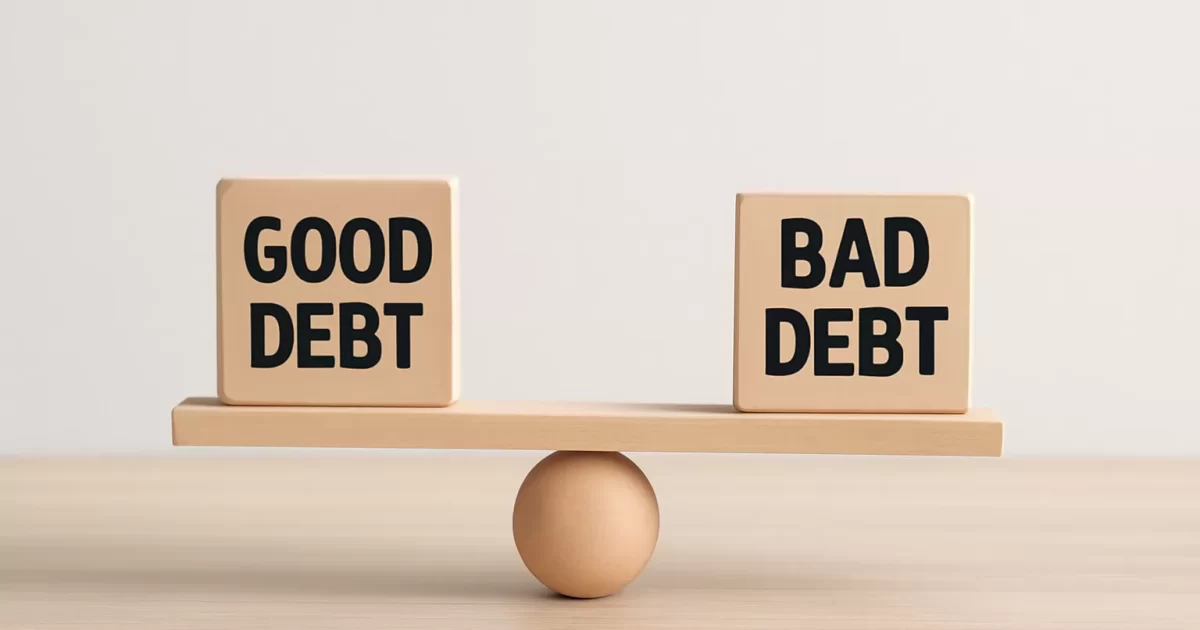
Understanding Debt: A Basic Overview
Definition of Debt
Debt is a sum of money borrowed by one party from another, typically to make large purchases, invest, or cover operational costs. It’s an effective tool for financial leverage, allowing individuals and organizations to use anticipated future earnings to fund current investments or needs.
The Role of Debt in Financial Health
When managed correctly, debt can enhance financial growth by helping you achieve goals that might otherwise be unattainable. However, poor debt management may lead to financial strain.
What is Good Debt?
Characteristics of Good Debt
Good debt is any debt that is considered an investment in your financial future, offering returns greater than the borrowing cost.
Examples of Good Debt
Common examples include:
- Student loans for higher education
- Mortgages for home purchases
- Business loans for expansion
What is Bad Debt?
Characteristics of Bad Debt
Bad debt typically has no potential to increase your net worth. It often comes with high-interest rates and purchases that depreciate in value.
Examples of Bad Debt
Examples include:
- Credit card debt for non-essential items
- Expensive car loans
The Impact of Good and Bad Debt on Financial Health
Short-term vs Long-term Effects
While good debt can enrich financial stability in the long run, bad debt might offer short-lived satisfaction but lead to prolonged debt burdens.
Case Studies: Real-life Scenarios
Consider the impact of student loans: when strategically acquired for high-demand degrees, they typically provide a good return. In contrast, accumulating retail credit card debt can quickly spiral, creating a negative financial impact.
Strategies for Managing Debt Effectively
Steps to Identify Good vs Bad Debt
- Assess the interest rate and repayment terms.
- Analyze the potential for asset appreciation or income generation.
Tips for Minimizing Bad Debt
To minimize bad debt:
- Set limits on impulsive buying using credit.
- Pay off high-interest debts quickly.
When to Consider Taking on Debt
Evaluating Financial Needs
Analyze the necessity and potential benefits of the debt relative to your current financial situation and long-term objectives.
Setting Financial Goals
The decision to incur debt should align with personal or business goals, ensuring that the expected outcomes outweigh the costs.
Long-term Financial Planning with Debt
Building a Sustainable Plan
Develop a comprehensive financial plan that includes debt management strategies, focusing on attaining and maintaining financial resilience.
Leveraging Debt for Growth
Use debt as a strategic tool to fuel growth, such as reinvesting profits from personal or business ventures to build future prosperity.
Frequently Asked Questions
How can I differentiate between good debt and bad debt? Look at the debt’s purpose and potential to improve your financial future. Good debt often involves investment in assets with appreciating value.
What are some tips for managing bad debt effectively? Prioritize paying off high-interest debts first, budget wisely, and avoid accumulating unnecessary credit card balances.